What Happens at an Integrative Vet Consultation (and Why It Takes an Hour)
More than a quick adjustment
Most people book an integrative consult expecting me to show up, adjust a back, and head down the road. I get it. That’s what the word “chiropractic” suggests.
But a real consultation is closer to detective work than a drive-by. Before I touch a needle, a laser, or other tool, I need to know who I’m working with, what’s going on, and whether this animal needs something I can’t give from the back of my truck.
That’s why every consult takes about an hour, and why no two treatment plans look alike. Here’s exactly what happens, step by step.
Step 1: The history
I start by listening, because every animal is an individual with their own story. Past injuries, illnesses, surgeries, lameness that came and went, the time the trailer door swung wide… I want all of it.
A horse that struggled with a hind leg two seasons ago, or a dog who injured one knee, will often compensate in ways that show up somewhere else later. History tells me where to look, and it frequently explains the problem you’re seeing today.
If you have vet records, competition notes, or videos, bring them. They help.
Step 2: The animal right now
Next, I look at what’s happening today. Is there a current problem? Is your horse lame? Is your dog hesitating on one side of a turn? Is there something new: a stiff neck, an attitude change under saddle, a dog who suddenly won’t jump into the truck?
I watch how they move, how they stand, and how they carry themselves. This is also where I want your observations. You know your animal far better than I do after one meeting, so when you say “he’s just not himself,” I take it seriously.
Step 3: Does this need Western medicine first?
Here’s the part people don’t expect from an acupuncture vet: sometimes I don’t start with acupuncture. Once I know the history and what’s going on now, I decide whether the problem needs a Western workup before anything else.
- Think there might be a bone chip? Radiographs.
- Suspect a tendon tear? Ultrasound.
- Wondering about a systemic problem like an endocrine issue? Bloodwork.
Needles and lasers are great tools, but they don’t replace a diagnosis. If your animal needs imaging or lab work, that comes first. Sometimes the best treatment is simply good veterinary care, and I’ll tell you so. Integrative means using everything, not skipping the parts that don’t come with a cool name.
Step 4: The DAPE
Now the part that makes people lean in. DAPE stands for Diagnostic Acupuncture Palpation Exam.
Using a scanning tool, usually my finger or the cap of a needle, I apply pressure over the acupuncture meridians and significant points. How your animal reacts tells me what may be going on from an Eastern medicine perspective. It works the same way in dogs and horses: a flinch, a twitch, a lean away, or a quick look back at me that says, “Excuse me?” Every reaction is information.
Sometimes the DAPE lines up with what I suspected from the Western exam. Sometimes it points somewhere I didn’t expect. Both are useful. When they disagree, that’s a reason to look closer, not to ignore one of them. When I suspect one thing but the animal is telling me another, those are like onion layer cases and where all the tools are needed to diagnose.
Step 5: The treatment plan
Now I put it all together: the history, the current exam, any Western findings, and the DAPE. From there I decide what will serve this individual animal best. The plan may include one of these, or several together:
- Western treatment: sometimes your animal simply needs good veterinary care
- Chiropractic adjustment
- Acupuncture needles
- Laser therapy
- Aquapuncture: using B12 at acupuncture points
I’ll cover each of these in its own post soon. The point for now is that the plan is built around your animal, not around whichever tool I happen to be holding.
Why it takes an hour (on average)
Because history, a current exam, deciding on diagnostics, the DAPE, and building a plan each take real time, and rushing any one of them means guessing.
Think of it as a physical, not a drive-through. It also leaves room for your questions, because I’d rather answer ten now than have you wondering later.
Quick questions
Is this just for horses? Nope. Horses and dogs both go through the same process, including the DAPE.
Does my animal need X-rays or bloodwork first? Only if the exam points that way. If it does, we do that before any other treatment.
Is the DAPE done with needles? No. It’s pressure applied with a finger or the rounded cap of a needle.
Is this only for animals that have a problem? Absolutely not! Performance animals can benefit from an evaluation before something goes wrong, the same way human athletes see a PT.
What should I have ready? Vet records, notes on past injuries, and anything you’ve noticed lately. Videos of the issue are a bonus.
Ready to book?
I bring the entire consultation to your barn or driveway, serving North Central Texas and South Central Oklahoma. Book through shalakovetmed.com, or send a message if you’re not sure whether your horse or dog needs one.
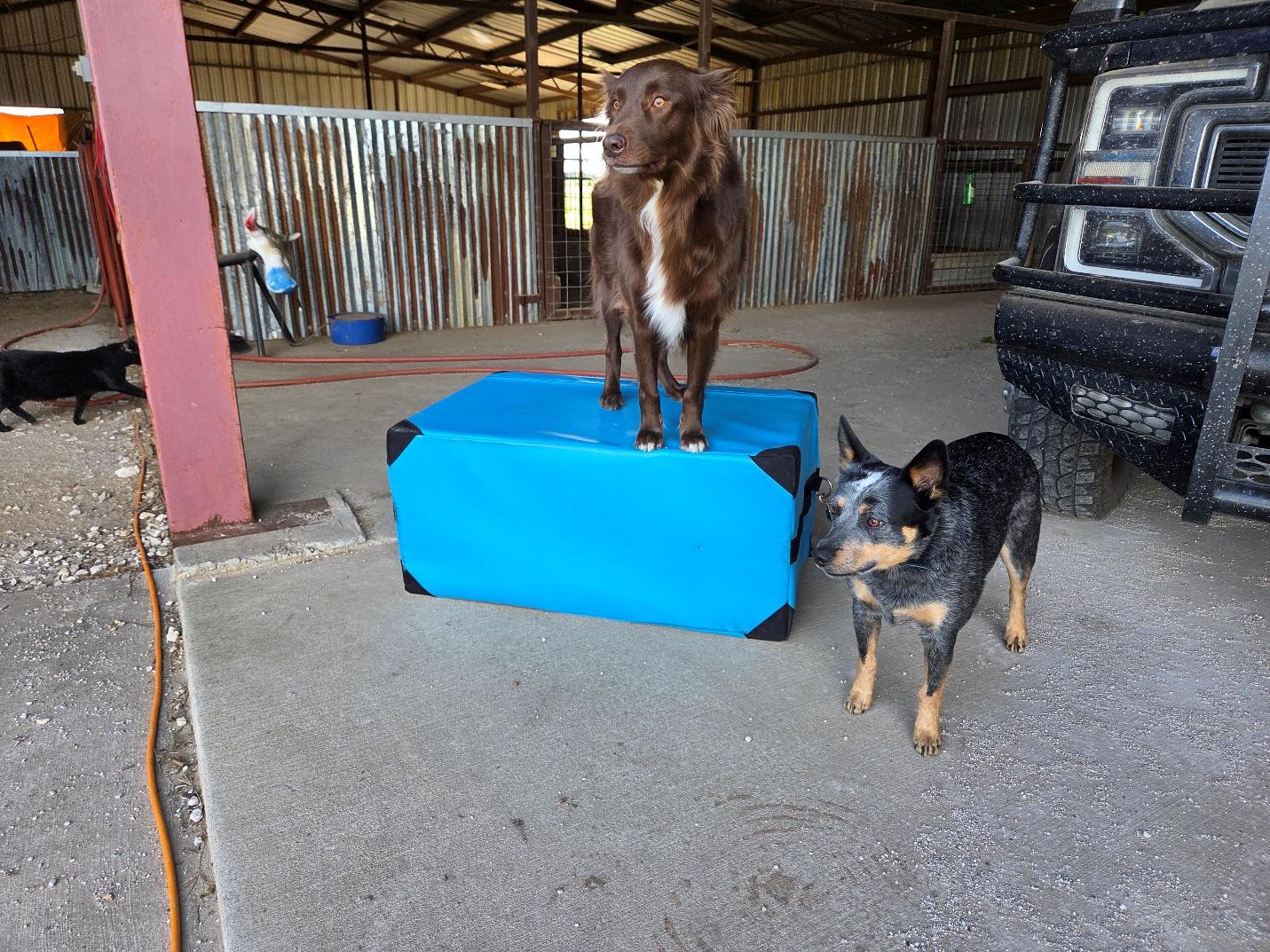
Hank fully supports this message.