Barn Hazards to Watch for This Spring: Protecting Your Horse from Hidden Toxins
Spring in North Central Texas brings longer days, greener pastures, and more time spent riding and working with your horse. While the warmer weather is welcome, it also introduces seasonal hazards that many horse owners do not immediately notice. As plants begin to grow, barns reopen after winter, and pastures are treated or fertilized, the risk of toxin exposure for horses increases.
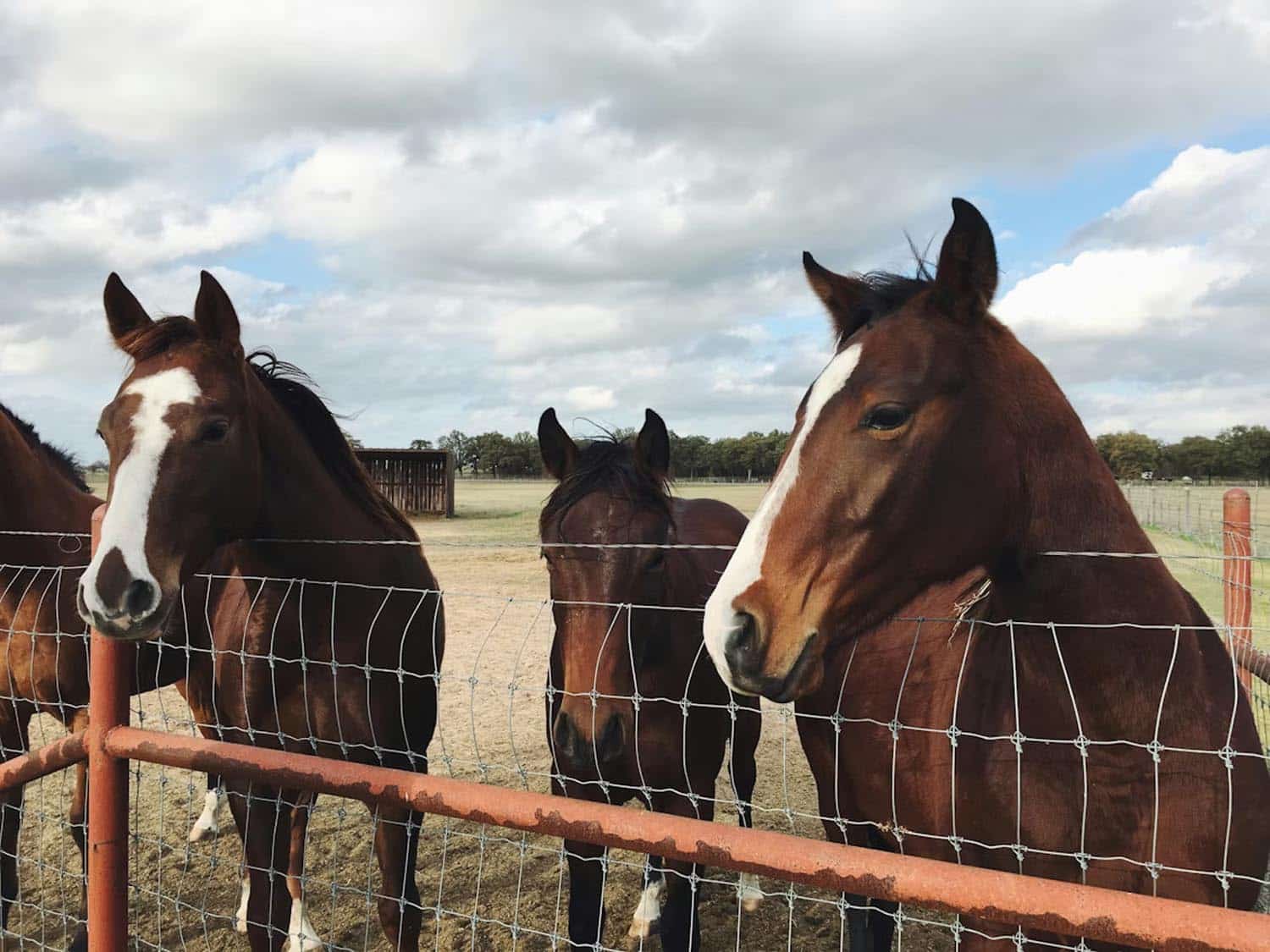
Horses are naturally curious animals. They explore their surroundings with their noses and mouths, which means they can easily encounter something harmful in the barn, feed room, or pasture. A few simple precautions can help prevent serious health problems and keep your horse safe throughout the season.
Toxic Plants Growing Around Barns and Pastures
Spring growth often includes plants that are dangerous to horses. Many toxic plants grow along fence lines, in overgrazed pastures, or around landscaping near barns.
Some plants to watch for in North Central Texas include:
- Yew
- Oleander
- Red maple
- Buttercups
- Nightshade
- Poison hemlock
Even small amounts of certain plants can cause severe health problems. In some cases, ingestion can lead to sudden illness.
Walk your pasture regularly during spring and early summer. Remove unfamiliar plants and check areas along fences, gates, and water sources. Horses may nibble plants when pasture grass is limited or when they are bored.
If you are unsure whether a plant is safe, our veterinary team can help identify potential hazards during a farm visit.
Moldy or Spoiled Feed
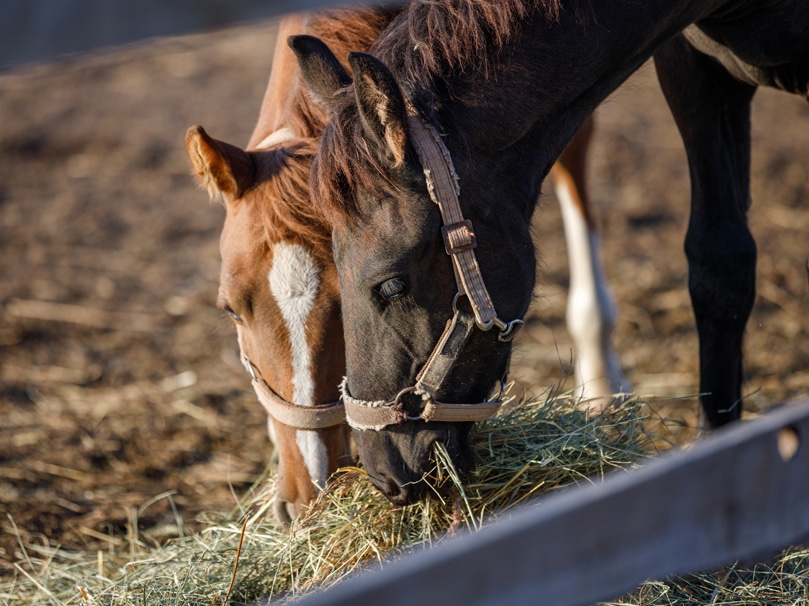
Warmer temperatures and increased humidity in North Central Texas can cause hay and grain to spoil more quickly. Moldy feed is a common source of toxins for horses and can lead to digestive upset or respiratory issues.
Common problems seen with contaminated feed include:
- Colic
- Reduced appetite
- Respiratory irritation
- Exposure to mycotoxins produced by mold
Always inspect hay before feeding. If it smells musty, appears dusty, or shows signs of mold, it should not be given to horses. Store hay and grain in dry, well ventilated areas and use sealed containers whenever possible.
Regularly cleaning feed bins and storage areas also reduces contamination risks.
Fertilizers, Herbicides, and Pesticides
Spring pasture care often involves applying fertilizers, weed control products, or insect treatments. While these products can improve pasture quality, they can also be harmful if horses ingest treated grass too soon.
Potential risks include:
- Grazing on recently sprayed pasture
- Eating grass clippings treated with herbicides
- Exposure to improperly stored chemicals
Always follow the recommended waiting period before allowing horses back onto treated pasture. Store all chemicals in sealed containers and keep them away from feed storage areas.
Rodent Poison and Barn Chemicals
Barns frequently use rodent control products to protect feed from rats and mice. Unfortunately, these products can pose a serious risk to horses and other animals if they are accidentally consumed.
Hazardous items sometimes found in barns include:
- Rodent bait and poison
- Ant traps or bait stations
- Cleaning products
- Paints and solvents
Store these items in secure cabinets or areas where horses cannot access them. Spilled bait or open containers can quickly become a danger.
Routine barn inspections help ensure that chemicals and pest control products remain safely stored.
Warning Signs of Toxic Exposure in Horses
Recognizing early symptoms of toxin exposure can make a significant difference in your horse’s outcome. If a horse ingests a harmful plant, chemical, or contaminated feed, signs of illness may appear quickly.
Symptoms to watch for include:
- Sudden colic or abdominal discomfort
- Excessive drooling
- Weakness or difficulty standing
- Diarrhea
- Loss of appetite
- Unusual behavior or neurological signs
If your horse shows any of these signs, contact our veterinary team as soon as possible. Quick evaluation and treatment can prevent more serious complications.
How a Mobile Veterinary Team Can Help
Routine health checks and barn safety evaluations can help identify risks before they become emergencies. A mobile veterinary team offers the convenience of examining horses in their own environment, where many hazards occur.
Shalako K Veterinary Medicine provides mobile veterinary care throughout the North Central Texas region, making it easier for horse owners to access expert care without transporting their animals.
Our veterinary team focuses on performance and wellness services for equine and canine athletes, including:
- Sports medicine evaluations
- Chiropractic care
- Acupressure therapy
- Rehabilitation support
- Preventive health guidance
Evaluating a horse in its barn and pasture environment can reveal potential risks that might otherwise go unnoticed.
Keeping Your Barn Safe This Spring
Spring is a great time to enjoy your horse, but it is also important to watch for hidden barn and pasture hazards. Regular pasture checks, safe feed storage, and proper chemical handling can help reduce the risk of toxin exposure.
If you have concerns about your horse’s environment or health, Shalako K Veterinary Medicine provides mobile veterinary care throughout North Central Texas. Contact our veterinary team at (214) 551-5334 today!